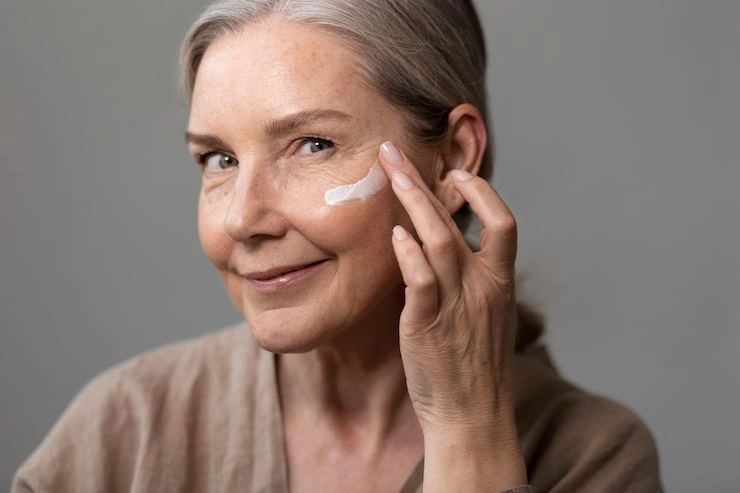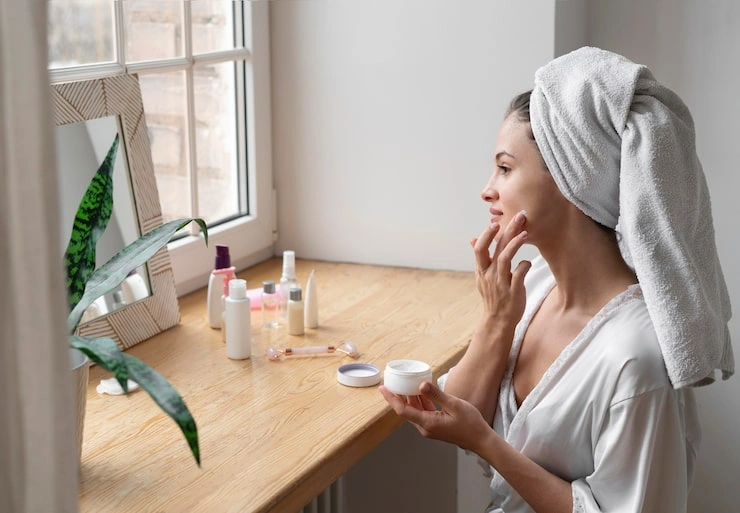
You wake up in the morning. Your cheeks feel dry and tight. But your nose and forehead look shiny like you put oil there. This is combination skin. Many people in India have this skin type. The weather changes, sweat, dust, and even the food we eat make this skin type act in a tricky way.
The good news is you can fix this. But you need the right night routine. Why night? Because at night your skin rests. It repairs itself. What you put on your face before sleeping decides how your face looks in the morning. This article is for you if you have oily forehead and nose but dry cheeks. No tough words. No fancy chemical names. Just real steps that the best night skincare routine for combination skin.
What Is Combination Skin?

Combination skin means your face has two different skin types at the same time. The middle part of your face – your forehead, nose, and chin – makes too much oil. This area is called the T-zone. The T-zone often looks shiny. You may get blackheads or small pimples here.
But your cheeks, and sometimes the area near your eyes, feel dry. They may feel rough. They may even peel a little in winter. So one face has two needs. Oily areas need less oil. Dry areas need more moisture. A good night routine balances both. It does not make oily parts more oily. It does not make dry parts more dry.
Read Also: Mineral Sunscreen For Oily Acne Prone Skin
Why Night Skincare Is More Important Than Morning Routine
In the daytime you put sunscreen and maybe a light moisturizer. That is mostly for protection. But night time is different.
When you sleep, your body repairs damaged cells. Your skin works harder to fix itself. Blood flow increases near your skin. This is the best time to give your skin what it needs. If you use the right products at night, your skin looks fresh in the morning. If you use wrong products, your face looks dull or broken out. For combination skin, the night routine has one main job – clean the oil from T-zone and give moisture to dry cheeks without making oily parts worse.
Step By Step Night Skincare Routine For Combination Skin
Do not use ten different products. That is a waste of money and it hurts your skin. Use only what you need. Follow these steps in the same order every night.
Step One – Remove Makeup And Sweat With Oil Cleanser
If you go outside in India, your face catches dust from the road, sweat from humidity, and if you wear makeup or sunscreen, that also sits on your face. Normal face wash does not remove oil based things like makeup and sunscreen fully. So first use a cleansing oil or a cleansing balm. Take a small amount of oil cleanser on your dry hands. Put it on your dry face. Rub slowly for one minute. You will see makeup or dirt melting. Then wash with normal water. For combination skin, oil cleanser is safe. It removes extra oil from T-zone but does not take away natural moisture from dry cheeks.
If you do not wear makeup or heavy sunscreen, you can skip this step. But if you go out daily, do not skip.
Step Two – Use A Gentle Face Wash That Does Not Make Skin Tight
After oil cleanser, you need a water based face wash. This cleans leftover dirt and oil. Pick a face wash that has no soap. Look for words like gentle cleanser or pH balanced on the bottle. Avoid face washes that make your skin feel tight or stretchy after washing. That means the face wash is too strong. Take a small amount on your wet face. Rub with your fingers in small circles. Focus more on your oily T-zone. On dry cheeks, wash gently for less time. Wash with normal water. Then pat dry with a soft towel. Do not rub the towel on your face. Rubbing hurts your skin.
Step Three – Use A Toner Only On Oily Parts If Needed
Many people do not need toner. But if your T-zone feels oily even after face wash, you can use a mild toner.
Do not use toners that have alcohol. Alcohol toners dry your skin too much. Your oily parts will make even more oil to fix that dryness. This is a trap. Instead use a toner with rose water or niacinamide. Put a little on a cotton pad. Wipe only on your forehead, nose, and chin. Do not put on dry cheeks. If your cheeks feel fine, skip toner on them.
Step Four – Apply Treatment For Your Main Problem
This is the step where you fix what bothers you most. Different people have different main problems with combination skin.
If you have blackheads or whiteheads on your nose – Use a salicylic acid product. Salicylic acid goes inside your pores and cleans oil. Use it only on your nose and forehead. Do not put on cheeks. Use this two or three times a week, not every night. If you have dark spots or uneven skin color – Use niacinamide. This is a very safe ingredient for combination skin. It controls oil on T-zone and helps dry cheeks feel better. You can put niacinamide on your whole face every night. If you have signs of aging like fine lines – Use retinol. But retinol is strong. Start with lowest strength. Use only twice a week. Put a very small amount. Always use moisturizer after retinol. Never put retinol near your eyes. Pick only one treatment product. Do not mix salicylic acid and retinol on the same night. That will hurt your skin.
Step Five – Moisturizer – The Most Important Step For Combination Skin
Many people with oily T-zone think they do not need moisturizer. This is wrong. If you do not put moisturizer, your skin makes more oil to protect itself. Then your T-zone looks more shiny. But you cannot use any moisturizer. Thick heavy creams will block your pores on T-zone and cause pimples. Very light gels will not give enough moisture to your dry cheeks. So what works for combination skin? A gel cream or a lightweight lotion. These are not too heavy. They are not too light. Look for moisturizers that say oil free or non comedogenic. Non comedogenic means it does not block pores. How to put moisturizer on combination skin – Take a small amount. Put more on your dry cheeks. Put very less on your forehead and nose. Do not rub too much. Just spread gently.
Step Six – Eye Cream Only If You Have Dark Circles Or Puffiness
Eye cream is not a must for everyone. But if you have dark circles or your eyes look puffy in the morning, you can use one. Pick a simple eye cream that has hyaluronic acid or caffeine. Take a very small drop on your ring finger. Tap gently near your eye bone. Do not pull your skin. Eye area skin is very thin and soft. If you are under 25 and have no eye problems, you do not need this step.
Two Times A Week – Exfoliate Gently
Exfoliation means removing dead skin cells from your face. Dead skin makes your face look dull. It also blocks pores.
For combination skin, you need two types of exfoliation.
- One time a week – Use a very mild scrub. But do not use walnut shell or apricot scrubs. They have sharp pieces that cut your skin. Use a scrub with small round beads. Scrub only on your T-zone. Do not scrub your dry cheeks.
- Second time a week – Use a face pack with multani mitti (fuller's earth). Multani mitti soaks extra oil from T-zone. But it can dry your cheeks. So put multani mitti only on your forehead, nose, and chin. On cheeks, put a hydrating pack like sandalwood or aloe vera.
- Do not exfoliate more than two times a week. Too much exfoliation damages your skin barrier. Then your skin becomes red and best night skincare routine for combination skin.
Common Mistakes People With Combination Skin Make
You may be doing these mistakes right now. Stop them from today.
Using same product on whole face – Your T-zone and cheeks are different. Treat them differently. Put oil control products only on oily parts. Put heavy moisture only on dry parts.
Washing face too many times – Washing face three or four times a day removes natural oil. Then your skin makes more oil. Wash only two times a day – morning and night.
Skipping moisturizer on oily parts – We already explained this. Skipping moisturizer makes more oil.
Using too many active ingredients – Active ingredients are things like salicylic acid, retinol, vitamin C. Using two or three together burns your skin. Use only one active ingredient per night.
Sleeping with makeup on – This is the biggest mistake. Makeup blocks your pores all night. You will wake up with new pimples. Never sleep with makeup.
What To Eat For Better Combination Skin?

What you put inside your body shows on your face. These food tips help your skin behave better.
Drink enough water – Not two or three glasses. Drink at least eight glasses of water every day. Water helps dry cheeks feel less dry. It also helps oily parts feel less oily. Eat less sugar and oily food – Samosa, pizza, sweets make your T-zone more oily. You do not have to stop completely. But eat less. Eat more fruits with water – Watermelon, cucumber, orange, muskmelon. These give your skin natural moisture. Eat roti made of millets (jowar, ragi) sometimes instead of regular wheat. Millets are good for skin health.
Morning After – How Your Face Should Feel
After following this night routine for one week, your morning face should feel different.
- Your T-zone should not look very shiny. Your cheeks should not feel tight or rough. Your face should look fresh without any product.
- If your T-zone still looks very oily, use less moisturizer there. If your cheeks still feel dry, put a little more moisturizer there.
- Keep adjusting based on what your skin tells you.
You May Also Like: How To Treat Pigmentation On Face Naturally India
Sample Weekly Schedule For Combination Skin
Here is a simple week plan. Follow this to stay on track.
- Monday – Cleanse, toner on T-zone, niacinamide on whole face, gel cream moisturizer
- Tuesday – Same as Monday
- Wednesday – Cleanse, salicylic acid only on nose and forehead, moisturizer (less on T-zone, more on cheeks)
- Thursday – Rest day. Only cleanse and moisturizer.
- Friday – Cleanse, multani mitti on T-zone and hydrating pack on cheeks, then moisturizer
- Saturday – Cleanse, niacinamide, moisturizer
- Sunday – Cleanse, gentle scrub only on T-zone, moisturizer
- This is just an example. Change based on how your skin feels.
Frequently Asked Questions
Can I use coconut oil on my combination skin at night?
No. Coconut oil blocks pores. Your T-zone will get more pimples. If you want oil, use jojoba oil. But only on dry cheeks. Not on T-zone.
How much time does it take to see results?
If you follow the routine correctly, you will see less oil on T-zone and less dryness on cheeks in three to four weeks.
My cheeks are dry but also have pimples. What to do?
This is a tricky situation. Do not use drying products on pimples. That will make cheeks more dry. Use salicylic acid only on pimple spot. Put moisturizer on whole cheek after that.
Do I need to spend a lot of money on products?
No. Many Indian pharmacy products work very well. Look for brands like Cipla, Sebamed, Cetaphil, or simple Ponds light moisturizer. Expensive does not mean better.
What if my skin feels burning after a product?
Stop using that product immediately. Wash your face with plain water. Your skin does not like that product. Do not use again.
Conclusion
Do not buy ten products together. That is too much for your skin and your pocket. Start with three things – a gentle face wash, a gel cream moisturizer, and one treatment product based on your main problem. Do this for two weeks. See how your skin feels. Then slowly add more steps if needed. The most important thing is not how many products you use. The most important thing is doing the same simple steps every night without missing. Regularity gives you good skin, not expensive products. Combination skin is not a problem. It is just a skin type that needs a little more care. Give it that care every night. Your face will thank you in the morning. Now start tonight. Clean your face. Put the right moisturizer. Sleep well. Wake up with better skin.